Can A 16x21x4 Air Filter Help With Seasonal Allergies
My eyes started itching before I finished my coffee this spring. The pollen wasn't coming through an open window. It was riding back through my own ductwork every time the blower kicked on.
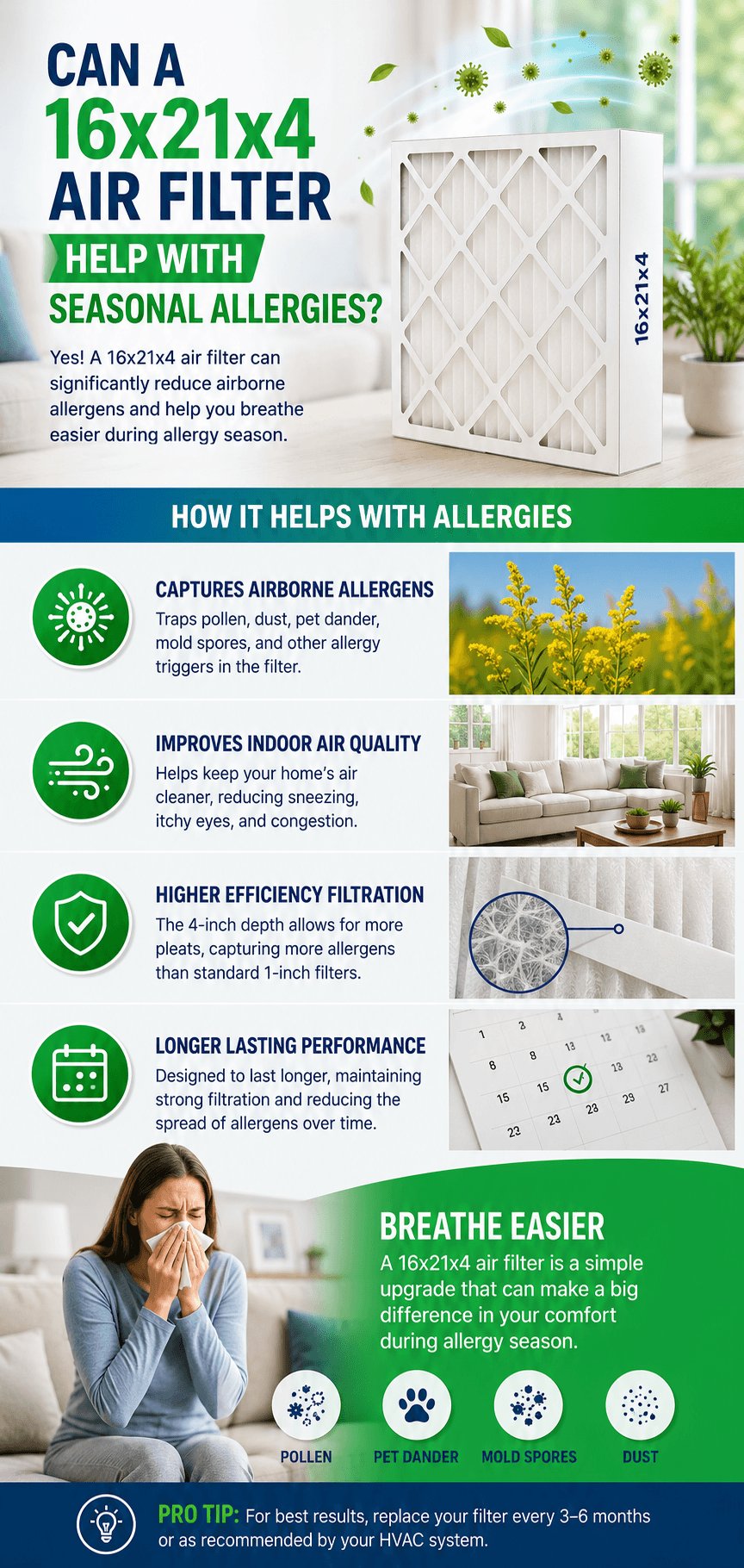
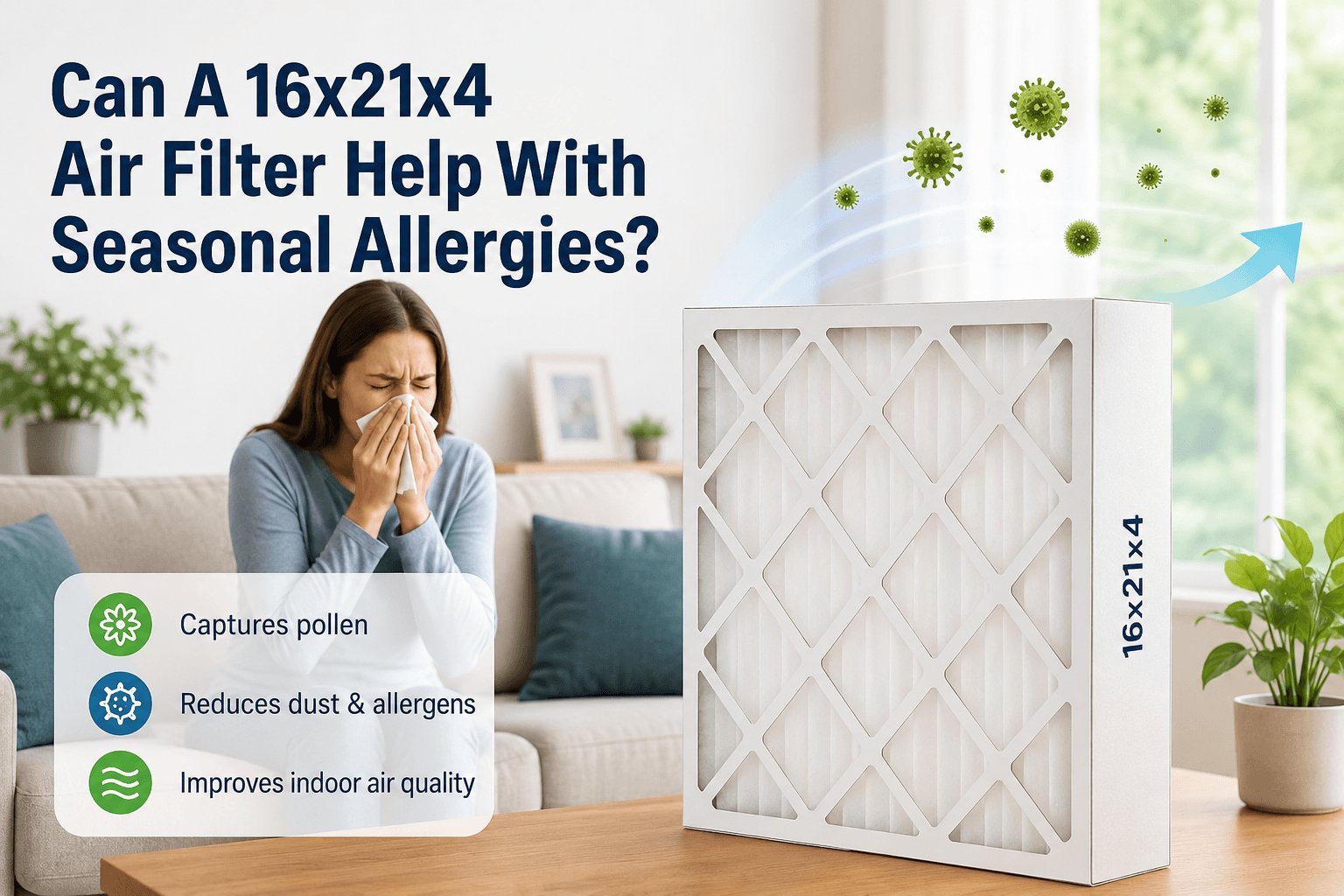
That's what got me testing different MERV ratings in my HVAC system instead of grabbing whatever filter was cheapest. A properly rated 16x21x4 air filter can genuinely cut down the pollen, dust, and dander circulating through your home. It won't replace an air purifier in your bedroom, and it won't stop pollen from riding in on your clothes. But it changes what recirculates through your ducts every time the system runs, and that adds up over a full allergy season.
Below, I'll walk through how a 4-inch pleated filter in this size actually captures allergens, which MERV rating makes sense if allergies are your main concern, and what to check before you buy.
TL;DR Quick Answers
16x21x4 Air Filters
A 16x21x4 air filter is a 4-inch-deep pleated furnace filter sized for HVAC systems with a 16x21 filter slot. I look for MERV 11 or MERV 13 for allergy relief, MERV 8 for basic dust control. The extra depth means more surface area and a longer life between changes than a standard 1-inch filter.
Top Takeaways
A 16x21x4 air filter can meaningfully reduce circulating pollen, dust, and dander when it's rated MERV 11 or higher.
MERV 13 captures the finest particles most residential systems can handle, including fine pollen fragments.
Washable 16x21x4 filters are typically capped around MERV 8, trading filtration strength for lower long-term cost.
Correct sizing and airflow-arrow orientation matter as much as MERV rating for real-world performance.
Always confirm your HVAC system's maximum MERV rating before upgrading to avoid restricting airflow.
How a 16x21x4 Air Filter Captures Allergens
An air filter works by forcing air through a pleated media that physically traps particles as they pass through. The 4-inch depth on a 16x21x4 air filter matters here. Deeper filters pack more pleated surface area into the same footprint, which means more room to trap particles before airflow gets restricted. That's part of why 4-inch filters tend to last longer between changes than a thin 1-inch filter in the same slot.
MERV Ratings Compared
Not every rating captures pollen the same way. Here's how the range breaks down:
MERV 8: catches larger particles like dust, lint, and larger pollen grains. It's a reasonable baseline, but fine pollen and mold spores can slip through.
MERV 11: steps up to catch pet dander and smaller pollen particles, which is where I've noticed the biggest jump in comfort during allergy season if you have pets in the house.
MERV 13: captures the finest particles residential systems typically handle, including smaller pollen fragments, some bacteria, and smoke. This is the range I'd point most allergy sufferers toward, as long as the HVAC system can handle the added airflow resistance.
HEPA: technically outperforms MERV 13 on paper, but true HEPA media is rarely designed to fit a standard 16x21x4 furnace slot without a specialized housing, so most homeowners get better real-world results from a high-MERV pleated filter sized correctly for their system.
Installation and Sizing
On installation, sizing accuracy matters as much as the MERV rating. A 16x21x4 air filter has to seat flush in the frame. Even a quarter-inch gap lets unfiltered air bypass the media entirely, which defeats the purpose no matter how high the MERV rating is. Look for the airflow arrow printed on the frame. It should point in the direction of airflow, toward the blower.
Buying Considerations
On the buying side, this size shows up in pleated, allergen-rated, and washable options across most major retailers, sold individually or in bulk multi-packs. If you're comparing a washable 16x21x4 air filter against a disposable pleated one for allergy season, know that washable filters are typically capped around MERV 8, so they trade some filtration performance for lower long-term cost. For anyone chasing MERV 11 or MERV 13 performance, a disposable pleated filter is currently the more realistic option.
“I switched my own system from a MERV 8 to a MERV 11 filter three allergy seasons ago, and the difference in how often I was reaching for antihistamines by mid-April was noticeable within a few weeks. It's a small change with a bigger payoff than I expected.”
7 Essential Resources
EPA: What is a MERV Rating?: official explanation of the MERV scale and EPA's filter upgrade guidance.
CDC: Pollen and Your Health: how pollen exposure affects allergy and asthma symptoms.
AAFA: Rhinitis, Nasal Allergy, Hay Fever: symptom management and prevention guidance from the Asthma and Allergy Foundation of America.
ACAAI: Allergy Facts and Stats: allergy prevalence data from the American College of Allergy, Asthma, and Immunology.
MedlinePlus: Allergic Rhinitis: National Library of Medicine overview of allergic rhinitis causes and treatment.
ASHRAE Position Document on Filtration and Air Cleaning: the engineering standards body behind the MERV testing method.
American Lung Association: Indoor Air: guidance on protecting respiratory health from indoor air pollutants.
3 Statistics
Indoor air can be two to five times, even up to 100 times, more polluted than outdoor air, and Americans spend about 90% of their time indoors, according to the American Lung Association.
Nearly 1 in 3 U.S. adults report having a seasonal allergy, eczema, or food allergy, per the Asthma and Allergy Foundation of America.
The EPA recommends upgrading to at least a MERV 13 rating when your HVAC system can accommodate it, since MERV is the ASHRAE-developed scale for measuring particle capture between 0.3 and 10 microns, the range that covers most airborne pollen and mold fragments.
Final Thoughts and Opinion
My honest take after a few years of paying close attention to this: a 16x21x4 air filter rated MERV 11 or MERV 13 is one of the easiest, lowest-effort changes I've made for allergy season. It's not a substitute for keeping windows closed on high-pollen days or showering after time outdoors, but it quietly does its job in the background every time the system cycles. If your HVAC system can handle the airflow resistance, I'd lean toward MERV 13 for the allergy season stretch and step back down to MERV 8 or 11 the rest of the year if you want to ease demand on an older blower motor.
Frequently Asked Questions
Is a MERV 13 or MERV 11 better for allergies?
MERV 13 captures finer particles than MERV 11, including smaller pollen fragments and some bacteria, so it generally offers stronger allergy relief if your HVAC system can handle the added airflow resistance.
Can I find a washable 16x21x4 air filter for allergies?
Yes, though washable options in this size are typically rated around MERV 8, which captures larger particles but lets more fine pollen through than a MERV 11 or MERV 13 disposable filter.
Where can I buy a 16x21x4 air filter near me?
This size is widely available through major home improvement, big-box, and online retailers, often in single units or bulk multi-packs.
How often should I change a 16x21x4 air filter?
Most 4-inch pleated filters in this size last 6 to 12 months under normal household conditions, though homes with pets or higher pollen exposure may need changes closer to the 6-month mark.
Is a HEPA filter available in 16x21x4?
True HEPA media generally requires a specialized housing rather than a standard furnace slot, so most 16x21x4 systems get better real-world results from a high-MERV pleated filter instead.
Can A 16x21x4 Air Filter Help With Seasonal Allergies
If your allergies flare up every time the system kicks on, the fix starts with the right filter in the right slot. Browse 16x21x4 air filter options to find the MERV rating that actually matches what you're dealing with this season.
Learn more about HVAC Care from one of our HVAC solutions branches…
Filterbuy HVAC Solutions - Miami FL - Air Conditioning Service
1300 S Miami Ave Apt 4806 Miami FL 33130
(305) 306-5027
https://maps.app.goo.gl/Ci1vrL596LhvXKU79